

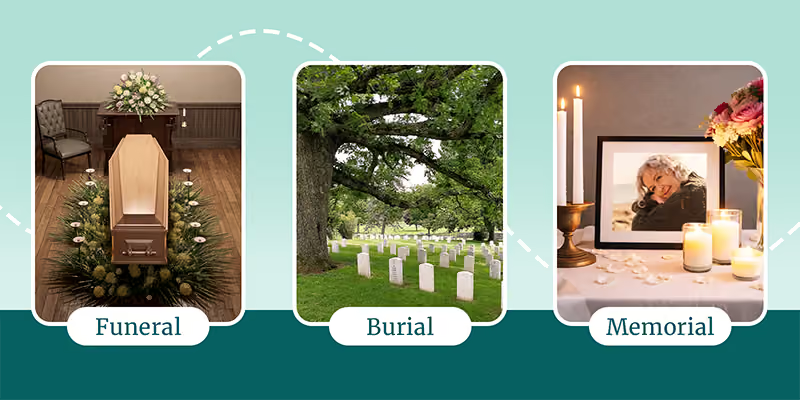
When someone dies, families are often required to make decisions while already processing grief. Terms such as burial, funeral, and memorial are often used interchangeably, which can make an already difficult time feel more confusing. Many people are unsure what a burial is, or how the burial meaning differs from a funeral or memorial service.
Because these terms are closely connected, they are often discussed together as part of funeral arrangements.
This guide explains the general difference between burial, funeral, and memorial services to help families understand their options depending on individual circumstances and preferences.
What is a burial, funeral, and memorial?
Burial
Burial refers specifically to what happens to the body, not the service itself. It is the act of placing the body into the ground or a mausoleum within a cemetery, often described as burying the body after death.
Burial is one option for final disposition. Cremation is the other most common choice in Australia. You can read more about cremation here.
Funeral
A funeral is the ceremony held after a death with the body present in a coffin. It is a formal service usually held in traditional locations like chapels and churches where family and friends gather to say goodbye to their loved one.
Memorial
A memorial is a service of remembrance held without the body present. It often takes place after cremation or burial and may be held days, weeks, or even years later. It often offers families greater flexibility as it can be held in almost any location.
How burials, funerals, and memorials differ
Burial, funeral, and memorial services are closely related, but they serve different purposes and do not always happen at the same time or in the same order. Families can choose the arrangement that best suits their circumstances.
A common approach is to hold a funeral service first, with the body present in a coffin, followed by burial at a cemetery or burial ground on the same day. This allows family and friends to attend both the ceremony and the burial together.
In other cases, the burial may take place privately, with a memorial service held later. This option is often chosen when families need more flexibility, when loved ones are travelling from interstate or overseas, or when a less formal gathering is preferred.
Some families choose to hold a single service rather than multiple services. This may be a funeral that includes the burial, or a memorial held after the burial has already taken place.
There is no fixed sequence that applies to every situation. The timing and order of services depend on the family’s wishes, cultural or religious practices, and practical considerations such as venue and cemetery availability.
What is involved in a burial?
In a burial, the body is prepared and placed into a coffin, which is then buried at a cemetery or designated burial ground. In Australia, burials must comply with state and local regulations. Cemeteries are managed by local councils, private operators, or cemetery trusts, and a licensed funeral director coordinates these arrangements on behalf of the family.
Most burials are accompanied by a service. This may involve a funeral ceremony followed by a graveside service, or a single service held at the cemetery before lowering the coffin. In some cases, it may be unattended, with the burial taking place privately without family or friends present.
Burial may take place immediately after a funeral service or at a later time, depending on family wishes, religious customs, or practical considerations. The burial itself can occur in an individual grave, a family plot, or an above-ground option such as a crypt or mausoleum.
For many families, burial provides a permanent place of remembrance. A grave or memorial allows loved ones to visit, reflect, and honour the person who has died. Burial may also hold cultural or religious significance and reflect traditions passed down through generations.
After burial, the body naturally returns to the earth over time. This gradual process is influenced by factors such as soil conditions and coffin materials and forms part of the meaning of burial for many people.
Some individuals also choose to plan or pre-pay parts of their burial in advance. This might involve selecting a burial plot, choosing a coffin, or noting personal wishes for the service. Recording these preferences ahead of time can ease future decision-making and help reduce emotional and financial pressure for family members.
Understanding how burial works can also help when considering other options, such as cremation.
Burial vs cremation: what’s the difference?
The main difference between burial and cremation is what happens to the body after death. In a burial, the body is placed in a coffin and interred either in the ground or in an above-ground structure such as a crypt or mausoleum.
Cremation involves using high heat to turn the body into ashes. The ashes can then be kept by the family, scattered in a chosen place, buried, or placed in a memorial location.
Both options may include a funeral or memorial service. The choice is often influenced by personal beliefs, cultural traditions, or family preferences.
You can learn more about their differences in this article.
Planning a burial
For families who choose burial, planning the service involves making specific choices about how it will be arranged.
Families usually begin by choosing a cemetery and burial type. This may involve purchasing a burial plot if one is not already owned, or selecting from an existing family plot. You can read more about burial plots here. A coffin is then selected, along with any cultural or religious elements the family wishes to include.
Arrangements may also include decisions around when and where the burial will take place, with service details discussed separately depending on the type of farewell chosen.
A funeral director can guide families through each step, liaise with the cemetery, and ensure all legal and administrative requirements are met.
You can read more about the burial process in our What is a Burial article.
What is involved in a funeral?
A funeral is a service where family and friends remember and honour a person who has died. It usually takes place with the person’s body present in a coffin and may include music, readings, prayers, or speeches. Funerals can be religious or non-religious and are shaped by cultural traditions, personal beliefs, and family wishes.
Funeral services are commonly held in a funeral chapel, place of worship, or at a cemetery. Funeral directors support families with planning and coordination, helping ensure the ceremony runs smoothly and reflects what feels most appropriate for the person being remembered.
How is a burial different from a funeral?
A funeral and a burial are often spoken about as if they are the same thing, but they serve different purposes. A funeral is the service or gathering, while a burial is the physical act of laying the body to rest.
The confusion is usually caused by funerals and burials often happening on the same day. In many cases, a funeral service is held first, followed by a burial at the cemetery. Because they occur close together, people may refer to the entire process as “the funeral,” even though the burial is a separate step.
It is also possible to have a funeral without a burial taking place at the same time. For example, a funeral may be held in a separate location before the burial occurs. A burial may also take place without a formal funeral, such as a private or unattended burial with no ceremony or public gathering.
What is involved in a memorial?
A memorial service can be formal or informal, religious or non-religious, depending on personal wishes and cultural traditions. It is a gathering where people come together to honour a person’s life and share memories. The service may include tributes or eulogies, music, or readings, as well as photos or personal items chosen by the family.
Someone usually officiates the service, such as a celebrant, clergy member, or family representative, though the structure is often flexible. Because a memorial is not tied to burial or cremation arrangements, it can be scheduled for a time that suits those attending, including weeks or months later.
At its heart, a memorial is about remembrance rather than ceremony or process. Funeral directors can assist with organising a memorial, but families may also choose to arrange it themselves.
How is a memorial different from a funeral or burial?
Memorials are often confused with funerals because they can look and feel very similar. Both services may include speeches, music, prayers, or shared memories. The key difference is that a funeral typically takes place with the body or coffin present, while a memorial does not.
A memorial service is also different from a burial. A burial is the physical act of placing the body into the ground or an above-ground structure, while a memorial service focuses on remembrance rather than the physical act of burial.
Confusion usually arises because memorials can occur before, after, or separately from a burial or cremation. In some cases, families choose to hold a memorial weeks or months later, to allow more time for loved ones to gather. In other situations, a memorial may be held instead of a funeral, particularly when the burial or cremation has already taken place privately.
Final thoughts
Choosing between a funeral, burial, or memorial is a deeply personal decision with many factors to consider. Families may consider the type of service that feels most meaningful, who will attend, travel distances, and even the budget. Some prefer a more traditional ceremony, while others choose a simpler or more flexible approach.
Understanding these differences can help you feel more confident in your decisions and choose the option that best honours your loved one.
At Bare, we don’t believe there is a single way to say goodbye. That’s why Bare Burial is designed to be flexible, giving families the ability to choose what feels right for them. We offer three burial options across our burial-serviced areas: an unattended (direct) burial, a graveside service burial, and a dual service burial.
If you’d like to explore your options further or make arrangements for a loved one, head to the link below or give our friendly team a call on 1800 071 176. We would be honoured to support you in planning a meaningful farewell.
Disclaimer: This article provides general information only and does not constitute professional advice. Please consult a qualified expert for guidance specific to your situation.
Learn more in our Resource Centre.
If you’re feeling overwhelmed, we’re here to help you through it. Our Resource Centre shows plenty of ways forward.