

Bare offers a simple and affordable cremation without compromising on the level of service. Click here to see the price for your area.
Cremation has overtaken burials as the preferred funeral method for Australians, but have you wondered what happens at a cremation and what is involved?
This article simplifies the cremation process and answers some common questions, like how is a body prepared for cremation and how can families be sure they receive the right ashes?
How is the body prepared for cremation?
After the funeral or viewing (if one is held), the coffin and body are respectfully transferred to the crematorium by the funeral provider. For a direct cremation with no service, the transfer occurs from the holding mortuary or care facility once all required documentation is complete.
Before cremation can take place, the death must be formally certified and the necessary permits or authorisations obtained. These legal approvals are required across Australia and are usually issued by a medical practitioner or authorised official, depending on the state or territory
To prepare the body, any items that could interfere with the cremation process, such as pacemakers, are removed. Jewellery, rings, and watches are also carefully taken off, documented, and either returned to the family or, if requested, left with their loved one to be cremated.
The deceased is then placed in a coffin or casket, which remains sealed for the cremation process. Australian regulations generally require the body to be placed in an approved container, such as a coffin, casket, or cremation capsule. For example, in New South Wales, the Public Health Regulation 2022 specifies that all cremations, including direct cremations, must use a coffin. These rules ensure the body is handled safely and respectfully at every stage of the process.
How are crematoriums regulated in Australia?
Crematoriums operate under strict state government regulations across Australia, covering licensing, public health, and environmental standards. These rules ensure cremations are carried out safely, ethically, and with proper emissions controls.
Facilities undergo regular inspections – for example, in Western Australia there is a cremation audit checklist that must be completed. There are also forms and permits that must be completed prior to cremation. Most are available online and are processed by the funeral director on behalf of the family.
These regulatory frameworks provide assurance that every cremation is conducted with the highest standards of safety and respect.
Can a memorial service be held before cremation?
Yes, families can choose to hold a memorial service or Celebration of Life before the cremation takes place. These services can include traditional funeral elements such as viewings, eulogies, and ceremonies that honour the deceased. The timing and format are entirely up to the family.
Alternatively, memorial services can be held at any time after the cremation, as they don't require their loved one to be present in a coffin. This flexibility allows families to plan a meaningful gathering when it suits them best, whether that's immediately following the death or at a later date when more people can attend.
Can people with pacemakers be cremated?
Yes, people with pacemakers or prosthetics can be cremated. It is important to notify the funeral provider if the deceased has a pacemaker or any other medical device so that they can advise the crematorium.
Pacemakers and any other mechanical devices with batteries must be removed before the cremation can take place, as they contain combustible chemicals that could explode when exposed to extreme heat. In general, metallic implants such as pins, screws, and joints can remain in the body during cremation. These items are typically made of materials that can withstand the high temperatures of the cremation process without causing harm. However, it is always best to inform the funeral director beforehand regarding such implants.
After the cremation, any remaining metal implants or prosthetic materials are collected and sent for responsible recycling, often through specialist programs. These materials may be repurposed for industrial use or donated to charitable causes, depending on the crematorium’s policy.
Are organs removed before the cremation process?
Generally, there is no need for a deceased person’s organs to be removed before cremation, unless they are being used for organ donation.
Your loved one may have already registered as an organ donor, or the family or next of kin may be asked for permission to use the deceased person’s organs for eligible organ transplant patients. The next of kin must give their consent before any organ donation procedure can happen, however this is a decision you may need to make immediately after the person has died.
You can find out more about organ and body donation in this article.
How can I ensure I receive the right ashes?
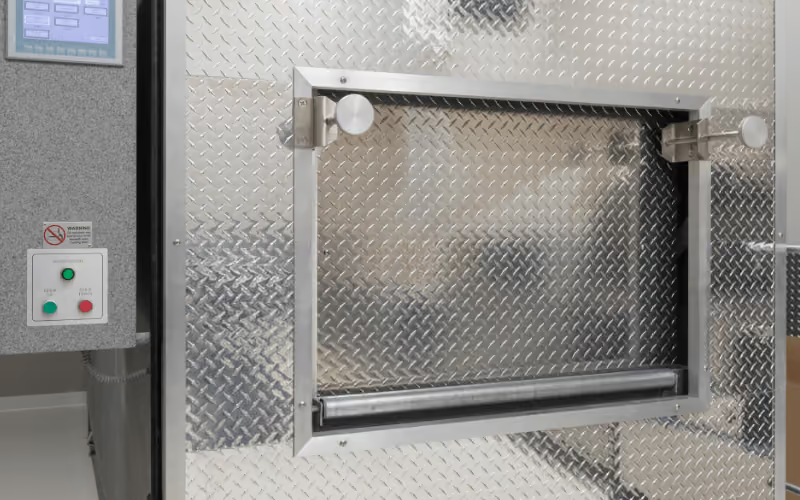
The cremator will only allow for one standard-sized coffin to fit inside, so only a single cremation can ever take place at any one time.
When the cremation process is ready to begin, the coffin’s nameplate is checked with the cremation order to ensure the correct identity of the deceased person.
The coffin and ashes receptacle are clearly labelled, checked, and verified. Your loved one’s paperwork travels with them throughout their care journey, and we oversee each step to ensure continuous identification and respectful care.
How is a body cremated?
Before the cremation can take place, any metal parts attached to the coffin, like handles, are removed. The cremator is heated to a temperature between 800-1000 degrees.
The coffin is then inserted into a cremation chamber – also known as a retort or cremator – with the deceased placed feet-first. A cremation chamber is an industrial furnace lined with fire-resistant bricks, operating at temperatures that typically exceed 1,000°C. It is the heat from the bricks and the combustible coffin that causes the cremation to occur.
Once the body and coffin have been completely cremated, the ashes remain. Any metallic contents like coffin nails are removed and the ashes are left to cool.
Once cool, any larger particles are ground into a fine, sand-like consistency using a machine called a cremulator. This is why cremated remains are commonly called 'ashes'. They are then placed into a cooling tray. Once cool, the ashes are added to a temporary sealed container, usually provided by the crematorium, ready for collection or delivery. Families can choose to transfer the ashes to a permanent urn of their choice at any time.
How long does a cremation take?
It generally takes around two hours for an adult body to be cremated, with the entire process - including preparation and cooling – usually taking about three hours in total.
However, how long a cremation takes can vary depending on a number of factors including the deceased person’s body mass, bone density and the type of coffin being cremated. The time of day can also influence the process, as the first cremation of the day may take longer while the chamber reaches full temperature.
Older or less efficient cremator units may also take longer than newer, computer-assisted systems.

What can you put in a coffin for cremation?
Sometimes families may wish to place an item of sentimental value in their loved one’s coffin, like flowers, soft toys or written notes and cards. Similarly, families often request that their loved one is dressed in a special outfit for the cremation. Those things are generally safe to do.
Almost anything can be placed in a coffin for cremation, except glass or a battery-operated device – like a phone, radio, or pacemaker (as mentioned earlier).
If an item of jewellery is sentimental or valuable, it’s better to keep it or give it to a loved one who will appreciate it. Any jewellery, rings or watches left on the deceased person won’t be part of the ashes and can’t be retrieved after the cremation has taken place.
If you wish to include personal items or have your loved one dressed in a special outfit, it's important to coordinate with your funeral director beforehand. This will ultimately depend on what item you wish to include and the regulations of the specific crematorium. While direct cremations are typically very straightforward, your funeral director can advise on what's permitted and help ensure any cultural, faith-based, or personal preferences are accommodated wherever possible.
What can you do with ashes after cremation?
Once the remains are returned to the family, there are many possibilities for what to do with ashes after cremation. Some families choose to keep the ashes in a decorative urn at home, while others prefer to scatter them in a meaningful location. According to the NSW Metropolitan Sydney Cemetery Capacity Report (2017), around one-third of people have their ashes buried or scattered at a cemetery.
Other options include incorporating ashes into keepsakes like jewellery, or placing them in a columbarium niche. Memorial services or Celebrations of Life can be held at any time the family chooses, as they don't require their loved one to be present in a coffin. This flexibility allows families to plan a meaningful gathering when it suits them best.
For more detailed guidance on ash disposition options, you can read our article: What to do with ashes after cremation.
Final thoughts on what happens at a cremation.
We hope this article has provided a better understanding of what happens at a cremation. You can read more about the cremation process in our article, a complete Guide to Cremations.
Bare offers simple and affordable cremations, including prepaid for those wishing to plan ahead. To find out more, call our Prepaid Team on 1800 202 901. Our hotline 1800 071 176 is also available 24/7 if you need immediate assistance.
You can get a quote for a Bare Cremation in your location by clicking here.
Disclaimer: This article and all information and pricing within it was accurate at the time of writing. Please see bare.com.au or linked sources for current pricing. This article provides general information only and does not constitute professional advice. Please consult a qualified expert for guidance specific to your situation.
Learn more in our Resource Centre.
If you’re feeling overwhelmed, we’re here to help you through it. Our Resource Centre shows plenty of ways forward.