

Whether you are planning ahead to prepay your funeral, or if you are making arrangements upon a loved one’s passing, you will probably be wondering how to choose the right funeral director.
The decision will generally take into account a few factors like affordability, customer service, location and personalisation. Most people tend to go with the first funeral director they come across, leaving them vulnerable to poor customer service and a huge bill.
The funeral director you choose will play a vital role in how your loved one is farewelled and will ultimately form a lasting memory among those who loved them. That's why choosing the right one is so important.
We hope this six-step guide helps to give you some things to think about when considering how to choose the right funeral director to farewell your person.
Step 1. Determine any funeral intentions
When choosing a funeral director, any information you can find out about the deceased person’s funeral intentions will help to make arranging a funeral easier.
They may have indicated a preference of funeral director, or at the very least provided some details on the type of funeral they would like.
The best place to start is by determining if the deceased person outlined their funeral intentions. As part of estate planning, funeral instructions or wishes are usually outlined in the Will or an Advance Care Directive, Advance Health Directive (or similar). Alternatively, they may have filled out a separate funeral intentions document stored with the Will.
Perhaps the deceased had a burial plot or prepaid funeral plan in place? Contact the service provider to advise them of the passing and determine what services are covered.

Step 2. Consider your loved one’s funeral wishes
If the deceased person didn’t have a prepaid funeral plan or if no funeral wishes have been specified, you will probably be asking yourself ‘How do I choose the right funeral director?’.
It’s often difficult to plan a funeral alone, so get some help from those who knew the deceased best. Consult the deceased’s next of kin (if that is not you) and their family.
Step 3: Make a list of what’s important
Planning a funeral for a loved one who has died is a final chance to pay tribute to their life and what they meant to those who loved them. Thus, a funeral should reflect the deceased person’s values and beliefs.
Together with the deceased’s immediate family, make a list of what is important to everyone. This will guide you when considering how to choose the right funeral director.
Together, determine the type of funeral service that would be most appropriate, to pay tribute to your person’s values, beliefs and passions:
- Will it be a burial; an attended cremation; or an unattended cremation with a separate memorial? If budget is a factor, this could rule out the option of a burial depending on the location, as the price of burials can differ significantly due to available land.
- Should you include any religious or cultural elements? Or is a non-traditional funeral service more appropriate?
- Are there any personalised elements that will best celebrate what your person loved? Think colours, music, foods, sports, hobbies and fandoms.
- Location of the service and final resting place – whether that is a burial site or what to do with cremated ashes.
- You will want to choose a funeral director willing to accommodate these requests, particularly if they are a little unconventional.

Step 4. Set a funeral budget
The price of a funeral often comes as a shock to many. A study by Australian Seniors found 32% of families suffered financial hardship after paying for a loved one’s funeral.
Despite the cost of a funeral commonly being upwards of $10,000, most people (81%) either accept the first quote they are given, or don’t get one at all, according to the 2021 SunLife Cost of Dying Report. Many families don’t realise they have other options, or they are too emotional to inquire.
Knowing exactly how much your family can afford to invest in a funeral service not only prevents this kind of financial hardship, it also helps you choose the right funeral home for your family; if a funeral company offers to help you find ways to fulfil your family’s wishes, while also staying within your budget, that’s a really good sign.
Setting limits upfront can help to counter the vulnerability of making this significant financial decision at a highly emotional time.
Which leads us to the next step…
Step 5: Shop around for the right funeral director
Traditional funeral directors are known for not being transparent with their pricing and upselling things the family doesn’t generally need. Consequently, families often accept the price they are quoted, even if it will place them in financial hardship at an already difficult time of grief.
To avoid this, shop around.
Aside from comparing prices, look for recommendations and customer testimonials. Word of mouth speaks volumes.
In the same way you might read a company’s online reviews when you purchase any other product, read through the funeral director’s online reviews and learn what their customers have to say.
Asking friends or family members about their experiences of funeral planning might also help point you in the right direction – or rule out the funeral directors to avoid!
Step 6: Choose a funeral director you trust
If you’re considering how to choose the right funeral director, it’s important to find someone who you are confident will provide a service that best celebrates your person’s life.
Go with someone you trust, says Alicia Avram, prepaid funeral team member at Bare.
“Reach out to them on the phone. It’s always good to talk to the company and speak with the funeral directors themselves, to build that trust,” she says.
“Even better – speak with multiple people at the company to establish the customer service standard.”
If you don’t feel like you’re in the best hands, keep searching until you feel you are making the right choice.
5 key points to consider when choosing a funeral director.
Choosing the right funeral director is crucial in making sure your loved one's farewell is handled with dignity, respect, and according to their wishes. Here are the five key points to consider when choosing a funeral director in Australia.
Connection.
In a time of loss, finding a genuine connection with your funeral director creates a simpler, less stressful experience. Consider these questions when you speak with them:
Do you feel comfortable discussing arrangements?
Do they listen to your needs and offer suggestions that meet your expectations?
Do they respect your boundaries or push expensive packages?
Do they rush you, or make time to learn about your loved one?
A good funeral director should make you feel at ease and make the process less overwhelming.
Suitability.
Choose a funeral director suitable for your specific needs. Do they offer the type of service you want? Do they have the experience to handle your loved one's funeral the way you expect? An unsuitable match might be wanting a direct cremation while being pushed toward an elaborate service.
Transparency.
Transparency is important. Many funeral homes once had a bad reputation for price hikes, commissions, and hidden fees, but now the push for clear pricing is stronger than ever. Your funeral director should provide clear information about services and costs, including an itemised breakdown. You need simplicity and honesty for peace of mind.
Affordability.
Funeral costs add up quickly. Do they offer packages within your budget? Are they transparent about costs, and do they offer financing options? Choose a funeral director who provides the services you need at a price you can afford.
At Bare, our prices are transparent and accessible without compromising on care. Click here for a free quote or call 1800 071 176.
Flexibility.
Choose a funeral director who can adapt to your needs. No two people are the same, so funerals should not all look the same. The right director should tailor services and accommodate most requests. At Bare, we offer options that suit your needs. You may wish to add a memorial or funeral to your simple cremation with our services. We can assist in organising and conducting the service while we take care of the cremation.
What if I don’t want a funeral? How to choose the right funeral director then?
When people talk about ‘funerals’ they often think of the attended ceremony or gathering. At Bare, we offer direct cremation, memorials, and funerals. By separating the cremation from the ceremony, families can choose exactly what they want. We take care of the unattended, direct cremation, while giving families the flexibility, budget, and time to plan a memorial or a funeral with the coffin present.
Or if you prefer to do nothing at all, a direct cremation allows for that, too.
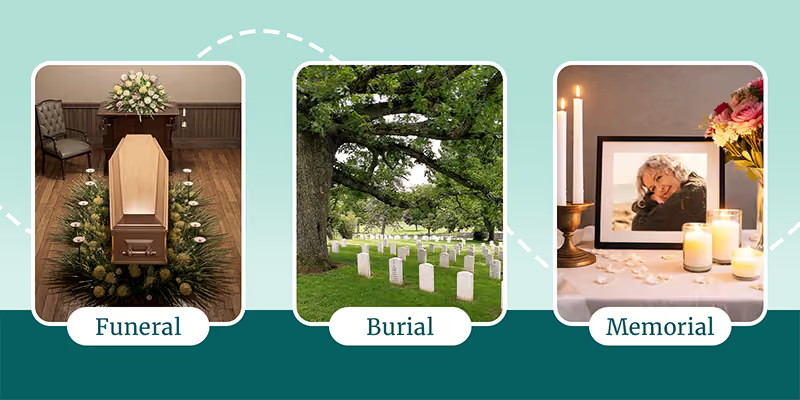
Memorial services are growing in popularity as an alternative to traditional funeral services, particularly in tandem with direct cremations. The main difference between a funeral and a memorial is that coffin is not present at a memorial. That's why they are often more connected to the life being celebrated, rather than grief and mourning.
If you are arranging a direct cremation and want to plan a memorial or celebration of life service yourself, our article Choosing a funeral celebrant for a memorial? 6 questions to ask may be helpful. Alternatively, our funeral arrangers would help plan and facilitate the service if that is your choice.
If you would like to arrange a funeral with Bare, you can call us any time of day or night on Give us a call on 1800 071 176, or fill in your details on the website.
Disclaimer: This article provides general information only and does not constitute professional advice. Please consult a qualified expert for guidance specific to your situation.
Learn more in our Resource Centre.
If you’re feeling overwhelmed, we’re here to help you through it. Our Resource Centre shows plenty of ways forward.